Structured data
Added site-level Organization and WebSite schema, then strengthened article, breadcrumb, FAQ, HowTo, and collection-page signals without marking guides as products.
Public ecommerce AI readiness experiment
SetupCarry is not just an affiliate content site. It is a live test bed for making ecommerce content easier for Google, AI answer engines, and shopping agents to understand before we turn winning categories into owned carry-kit bundles.
Why this case study exists
Store AI Audit helps small ecommerce stores check whether AI search and shopping agents can read their product facts, schema, policies, and buyer questions. SetupCarry gives us a public, measurable example of the same work: improve the site, track search and click signals, then show what changed.
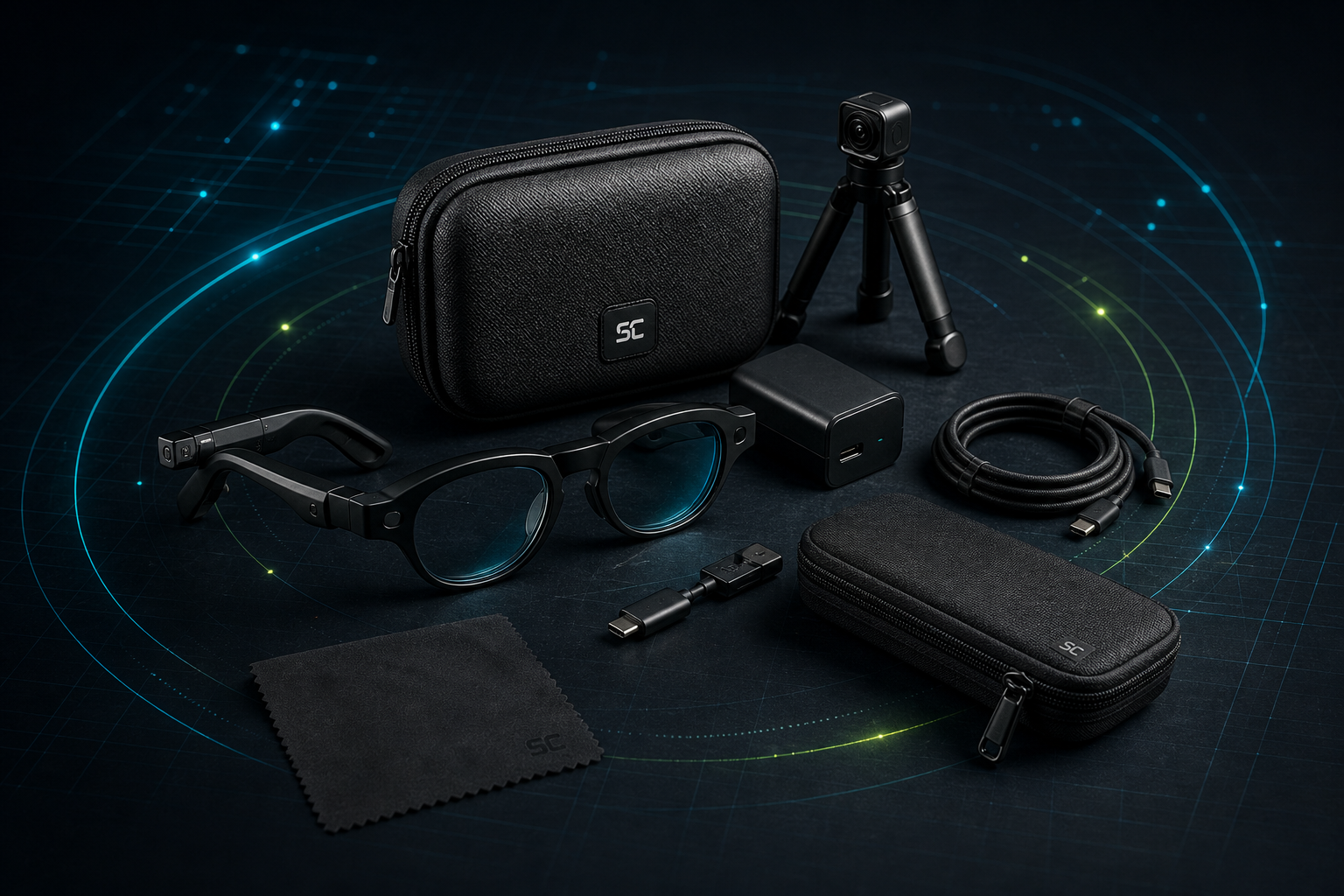
The strongest first category is smart glasses carry: protective cases, Ray-Ban Meta travel case decisions, cleaning kits, cable storage, and future accessory bundles.
Starting point
| Signal | Value | Meaning |
|---|---|---|
| AI readiness | 77 | Good foundation, but product facts and schema needed more explicit extraction paths. |
| Agent readiness | 78 | Readable enough to audit, but collection/product sampling and same-site URL discovery were weak. |
| GSC 24h baseline | 0 clicks / 0 impressions | Too early to judge SEO performance; this becomes the first benchmark. |
| GA4 source of truth | G-MSEVBXG1DK | The live site sends analytics events to this measurement ID. |
What changed
Added site-level Organization and WebSite schema, then strengthened article, breadcrumb, FAQ, HowTo, and collection-page signals without marking guides as products.
Added visible product facts that state compatible models, use cases, buying order, risks, search terms, and recommendation entry points.
Moved high-intent pages away from generic content and toward tables, checklists, buying order, red flags, and what-not-to-buy sections.
Tracked product clicks and /go/ redirects with link ID, product type, source page, affiliate status, and campaign fields.
Measurement plan
The first 24 hours are only a tracking check. The useful windows are 7, 14, and 28 days. A page wins when it earns impressions, attracts the right landing-page traffic, and sends readers to specific product options.
Pages under observation
Primary experiment page for smart glasses accessories, Ray-Ban Meta travel case demand, and future bundle fit.
Problem-led query with replacement intent and a clear click path to charging case options.
Creator gear buying page used to compare non-smart-glasses accessory intent.
Organizer page used to test whether pouch demand connects to future carry-kit bundles.
Next decision
If the smart glasses pages earn repeated impressions and affiliate clicks for hard cases, charging cases, cleaning kits, or cable organizers, those product types become candidates for sampling, supplier checks, and a future owned SetupCarry bundle.